
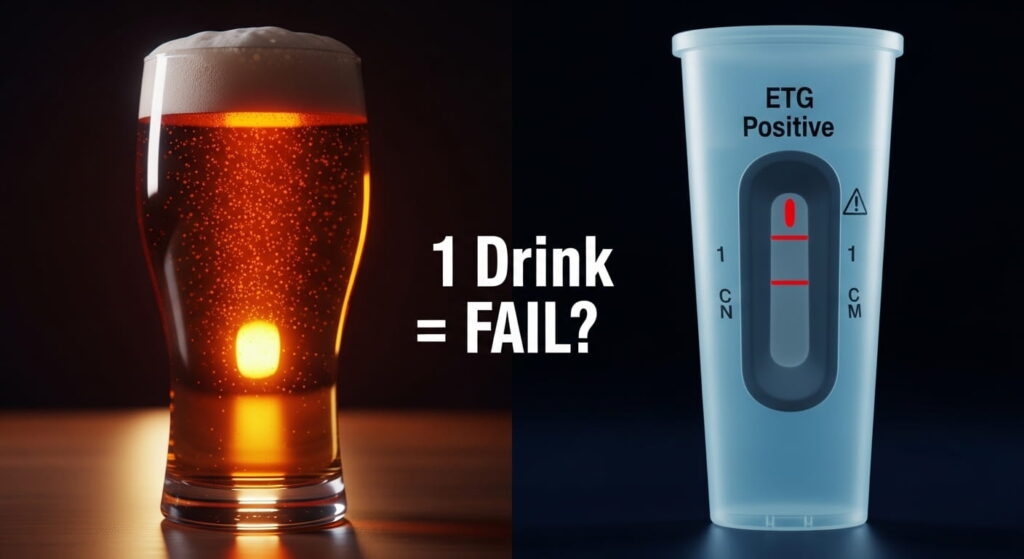
Yes, one drink can show up on an ETG test—especially within 12 to 24 hours. Detection depends on your body, the test sensitivity, and how much time has passed.
For many people, this isn’t just curiosity. It’s about avoiding serious consequences like failing a probation test or workplace screening.
What Is an ETG Test and Why It Matters
An ETG test detects ethyl glucuronide (ETG), a byproduct formed when your body processes alcohol (ethanol). Unlike alcohol itself, which leaves your system quickly, ETG stays longer in urine.
Why ETG Testing Is Used
- Probation and court monitoring
- Workplace drug testing
- Rehab programs
- Medical compliance checks
This makes ETG testing much stricter than breathalyzers or blood alcohol tests.
ETG testing is widely used to detect alcohol consumption even after it leaves the bloodstream. According to the Substance Abuse and Mental Health Services Administration (SAMHSA), alcohol biomarkers like ETG can remain detectable longer than standard alcohol tests, making them useful for monitoring abstinence in clinical and legal settings.
Detection Time After One Drink
Quick Answer
- 0–12 hours: Very high chance of detection
- 12–24 hours: Moderate to high chance
- 24–48 hours: Possible (depends on test sensitivity)
- 48+ hours: Unlikely for one drink
Detection Timeline Table
| Time After Drinking | Detection Risk |
|---|---|
| 0–12 hours | Very High |
| 12–24 hours | High |
| 24–36 hours | Moderate |
| 36–48 hours | Low |
| 48+ hours | Very Low |
Even a single beer, glass of wine, or shot can produce enough ETG to be detected.
ETG Cutoff Levels Explained
Not all tests are equal. The cutoff level determines how sensitive the test is.
Common Cutoff Levels
| Cutoff Level | Sensitivity | Impact |
|---|---|---|
| 100 ng/mL | Very High | Detects even tiny exposure |
| 300 ng/mL | Moderate | Standard level |
| 500 ng/mL | Lower | Reduces false positives |
What This Means for One Drink
- At 100 ng/mL, one drink is very likely detected
- At 300 ng/mL, detection is still possible within 24 hours
- At 500 ng/mL, detection risk drops after 24–36 hours
Lower cutoff = higher risk.
Will You Pass? (Decision Framework)
Use this simple logic to estimate your risk.
Step 1: Time Since Drinking
- Less than 24 hours → High risk
- 24–48 hours → Medium risk
- More than 48 hours → Lower risk
Step 2: Test Sensitivity
- 100 cutoff → High risk
- 300 cutoff → Moderate risk
- 500 cutoff → Lower risk
Step 3: Personal Factors
- Fast metabolism → Lower risk
- Slow metabolism → Higher risk
Final Rule
If multiple high-risk factors apply, assume the test can detect alcohol.
Factors That Affect ETG Detection
1. Metabolism Rate
Your body processes alcohol differently based on genetics, liver function, and overall health.
2. Body Weight & Composition
Smaller individuals often have higher alcohol concentration from the same drink.
3. Hydration
Drinking water may dilute urine slightly but does not remove ETG completely.
4. Type of Alcohol
Beer, wine, or liquor—ETG formation depends on alcohol content, not type.
5. Liver Function
Alcohol is processed through the liver, affecting how quickly ETG forms and clears.
Real-Life Scenarios (What Actually Happens)
Scenario 1: One Beer at Night
Test next morning → High chance of detection
Scenario 2: One Glass of Wine
Test after 24 hours → Possible detection
Scenario 3: One Drink + 36 Hours
Detection → Less likely but still possible
Scenario 4: One Drink + 48 Hours
Detection → Unlikely in most cases
These scenarios reflect typical outcomes, but results vary.
Can One Beer Fail an ETG Test?
Yes, one beer can cause a positive result—especially if:
- Test is within 24 hours
- Cutoff is low (100 or 300)
- Your metabolism is slower
This is why assuming “one drink is safe” is risky.
Accuracy of ETG Testing
ETG tests are known for being highly sensitive.
Pros
- Detects even light drinking
- Longer detection window than alcohol tests
- Useful for monitoring abstinence
Cons
- Can detect small exposures
- Risk of false positives
- Sensitivity varies by lab
False Positives: What You Need to Know
Some non-drinking sources can trigger ETG results.
Common Sources
- Mouthwash containing alcohol
- Hand sanitizer
- Certain medications
- Fermented foods
Important Insight
Most labs use higher cutoffs (300–500 ng/mL) to reduce accidental positives.
ETG vs Other Alcohol Tests
| Test Type | Detection Window | Use Case |
|---|---|---|
| ETG (Urine) | 24–72 hours | Past alcohol use |
| Breathalyzer | 6–12 hours | Current intoxication |
| Blood Test | 6–12 hours | Legal/medical use |
| Hair Test | Up to 90 days | Long-term patterns |
ETG stands out for detecting alcohol after it’s no longer in your blood.
How to Reduce Risk Before an ETG Test
There is no guaranteed way to “pass” after drinking, but you can reduce risk.
Best Practices
- Avoid alcohol for at least 48–72 hours
- Stay normally hydrated
- Avoid alcohol-containing products
- Know your lab’s cutoff level
What Doesn’t Work
- Drinking excessive water
- Detox myths
- Last-minute tricks
If you want a more accurate estimate of your alcohol detection time, you can use our advanced tools. Try the ETG calculator to estimate how long alcohol may stay in your system, or explore the advanced ETG calculator for detailed insights based on your body and drinking pattern. You can also check the ETG alcohol urine test calculator to better understand your test results and detection window in real scenarios.
👉 ETG Calculator
👉 ETG Alcohol Urine Test Calculator
Common Mistakes People Make
- Thinking one drink won’t show up
- Ignoring cutoff levels
- Believing dilution removes ETG
- Testing too soon after drinking
These mistakes often lead to unexpected positive results.
Local Testing (USA & UK)
If you’re searching for:
- “ETG test near me”
- “alcohol urine test USA or UK”
Where to Get Tested
- Drug testing labs
- Hospitals
- Occupational health clinics
- Rehab centers
Cost Range
- USA: $30–$150
- UK: £20–£80
What to Ask Before Testing
- What cutoff level is used?
- How fast are results delivered?
- Is the lab certified?
Key Takeaways (Quick Summary)
- One drink can show up on an ETG test
- Detection is strongest within 24 hours
- Cutoff levels play a major role
- 48–72 hours is generally safer
- No method guarantees a negative result
FAQs
1. Can one drink cause a positive ETG test?
Yes, especially within 24 hours and with sensitive cutoff levels.
2. How long after one drink will ETG show up?
ETG appears within hours and can remain detectable for up to 48 hours.
3. Will I pass an ETG test after 24 hours?
Possibly, but not guaranteed—depends on cutoff level and metabolism.
4. Can drinking water help pass ETG test?
No, it may dilute urine slightly but does not remove ETG.
5. What is the safest time to take an ETG test?
Waiting 48–72 hours after drinking significantly lowers risk.
6. Can mouthwash cause a positive ETG test?
In rare cases, yes—especially with very sensitive tests.
7. Is ETG test more accurate than breathalyzer?
Yes, it detects past alcohol use rather than current intoxication.
8. Does one beer show up the next day?
Yes, it can still be detected the next day depending on conditions.
Conclusion
One drink is not always “safe” when it comes to ETG testing. The outcome depends on timing, cutoff levels, and your body’s metabolism.
If your situation involves legal, workplace, or medical testing, the safest approach is simple: avoid alcohol at least 48–72 hours before testing.
Understanding how ETG works helps you make smarter decisions—and avoid costly mistakes.